
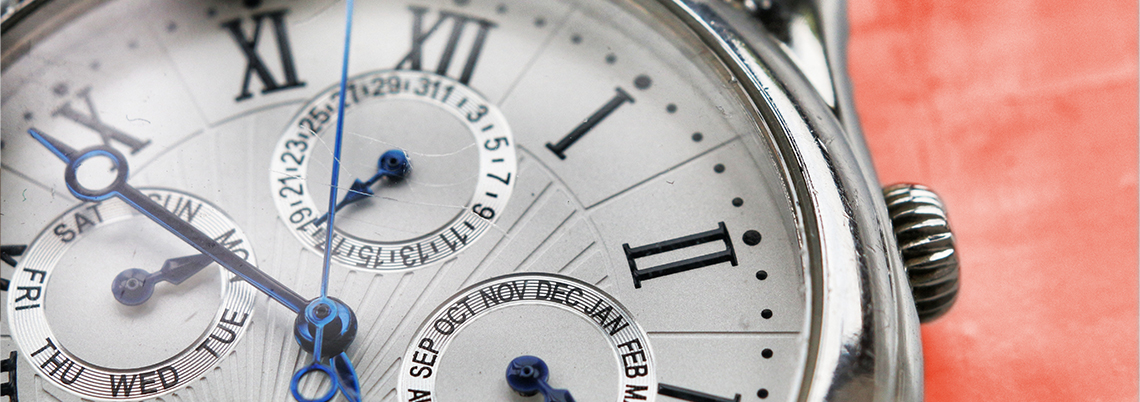
“There’s a kind of time travel in letters, isn’t there? I imagine you laughing at my small joke; I imagine you groaning; I imagine you throwing my words away.“
Some books are written to be devoured. You consume them, tearing through pages, trying to sate a hunger created from within its words. ‘This is how you lose the Time War’ is not one of those books. This novella needs to be savoured.
The Concept
In the distant future, two agencies have perfected time travel, twisting and tweaking timelines as they war against each other. On one such battlefield two agents lock eyes, a letter is given and a correspondence begins. What starts as taunts as they foil each other’s plans, soon becomes something deeper.
The book follows an interesting epistolary structure. Each chapter begins by introducing us to the scene in time or space. The agent follows their mission only to find themselves thwarted and their next letter found in increasingly creative concepts that push the bounds of both fantasy and science fiction.
An interesting addition to my enjoyment was how each agent was written by a separate author. Whilst the overall story had been plotted out together, Amal El-Mohtar and Max Gladstone separately wrote the alternating chapters. This definitely allowed for each reply to contain a level of genuine response both in the letter and its accompanying scene.
A Book to be Enjoyed
This leads me to what is ultimately the books greatest strength: it’s prose. Each letter is written delicately with the level of dedication two star crossed lovers would commit. In the story, the letters can only be sent periodically, lest they reveal themselves as traitors. The letters themselves live up to this, each one reading as if it had been pondered and derived over days or weeks. The relationship they build feels realistic and the language they use keeps you engrossed.
The writing should be enjoyed slowly, letting each letter and its meaning marinate. The eclectic scenes, from the Mongol hordes to the cliffs at the end of time, become overwhelming when you blitz through them. However, when each one is held separate from its neighbours, it feels complete by itself. The description, the metaphors and the pure emotion behind the words are this books strongest features.
This is not to say this book is without issue. Though, I begin to stray into light spoilers to explain them. Consider yourself warned.
“Tell me something true, or tell me nothing at all.”
The Downfall
Whilst both Red and Blue’s letters are beautifully written, they add to its own downfall. The two characters are amorphous at the start. I very quickly lost track of who was who. They connect over their ability to outsmart the other and their fondness for learning the lost art of letter writing, but that means that they both approach everything in a similar manner. It’s only when greater levels of worldbuilding are introduced (quite late on in the book) that I begin to see them as separate and even then, distinct is not a word qualified to be used.
On top of this, the book builds big expectations of the intricacies of this time war. It starts (and indeed, ends) with vague terms of strands and braids and how the multiple timelines are used to support or weaken empires that support or weaken their abstract agencies. Anyone who’s primary interest is in the time-travel aspect is left confused and disappointed as we focus on the two characters (who at this point still feel the same).
The mechanisms behind this aren’t ever properly explained but yet the ending comes to rely on it. The people whose expectations are best met by the conclusion are those who long for the love story and the language verging on poetry. Yet these could be put off by the lack of character building at the start.
In essence, those not deterred by the beginning are put off by the end. I feel like it’s only people with a great love of both that can truly enjoy this book. For those people (and I included myself in this) it is a work of art.
A Last Word
If you can accept the settings and it’s time mechanisms as just being so,
and if you hang on until Red and Blue read as different colours
and if savouring the prose is something you will love, then this book will satisfy like few others can.
I just think that’s a lot to ask.
“And everyone is alive, somewhere in time.”

 Beyond The Spine Reviews