
Spoiler free for the first half. Spoiler sections are clearly marked in subtitles.
I loved this book. It was everything I didn’t know I wanted from a written version of the Avatar series.
What is ‘The Rise of Kyoshi’ About?
The Rise of Kyoshi is an addition to the Avatar universe. If you’re on this blog post, you’re probably already aware that I’m referring to the awesome animated series, and not the blue CGI aliens from Pandora. But in case not, I’ll briefly explain the central draws.
A Little Info on the Avatar Universe
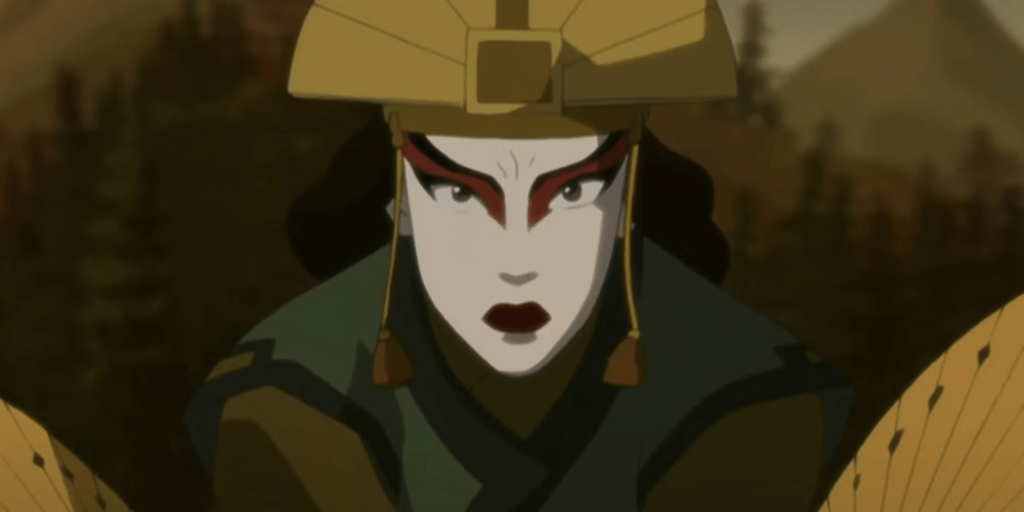
Avatar is a fantasy series inspired by Asian cultures where a select few can use elemental magic. This magic is known as ‘bending’ (like bending the forces to your will) and is achieved through enacting various Asian martial arts stances.
If you’re thinking, ‘Oh, like Naruto’s ju jitsus’, then think again. Avatar’s magic summoning stances are far superior. Earth bending is inspired by a real-world art known as ‘Hung Gar’, where the focus is about staying low, strong, and balanced—like the earth itself. There’s a very visible difference compared to the water bending style which really flows. Through the character’s movements, you can almost believe that this really would work. It’s an incredibly considered series and the magic system has a tangible effect on the societies of its world.
…Maybe it should be on required reading lists for anyone studying fictional magic systems. I really think it’s wonderful.
Then, there’s the avatar—a powerful individual capable of channelling all four elemental magics. There is only ever one avatar in the world, and each time the avatar dies they are reborn as a child and discovered years later. The avatar is almost always the focus of the series’ plots; after all, they do tend to be right in the middle of things from a young age.
There are two animated Avatar shows following the journeys of Avatar Aang and Avatar Korra over multiple seasons. I watched Avatar: The Legend of Aang as a kid, and I’ve rewatched it twice between the ages of 18 and 28. It’s one of those shows that’s truly ‘suitable for all ages’.

Should I Read ‘The Rise of Kyoshi’ Before the Animated Series?
If you’re going to watch the animated series anyway, then you should probably watch them first. You don’t learn much about the character of Kyoshi from the animation, but you do get a feel for the universe, its magics and politics.
On the other hand, I think the book does a good job of quickly surmising those things. I certainly wouldn’t stop anyone from starting their Avatar experience with The Rise of Kyoshi, though I know other readers don’t feel the same way.
One thing to consider is that the books aren’t quite as suitable for young children as the animation is. However, the literature is well targeted towards the teenage and YA audiences.
The books are a slightly different matter and arguably not so suitable for young children, but perfect for the teenage and YA audience. The Rise of Kyoshi occurs in a largely untreaded, earlier section of Avatar history.
A Little Info on ‘The Rise of Kyoshi‘
Overall, I would describe it as a coming of age/ responsibility plot. Like it’s predecessors in the Avatar franchise, the main characters are young people striving to understand the world around them while it all seems to be falling apart.
This is a book unafraid of tackling big issues. Power imbalances and poverty are key themes, alongside others than I won’t mention for fear of spoiling the importance of certain plot threads.
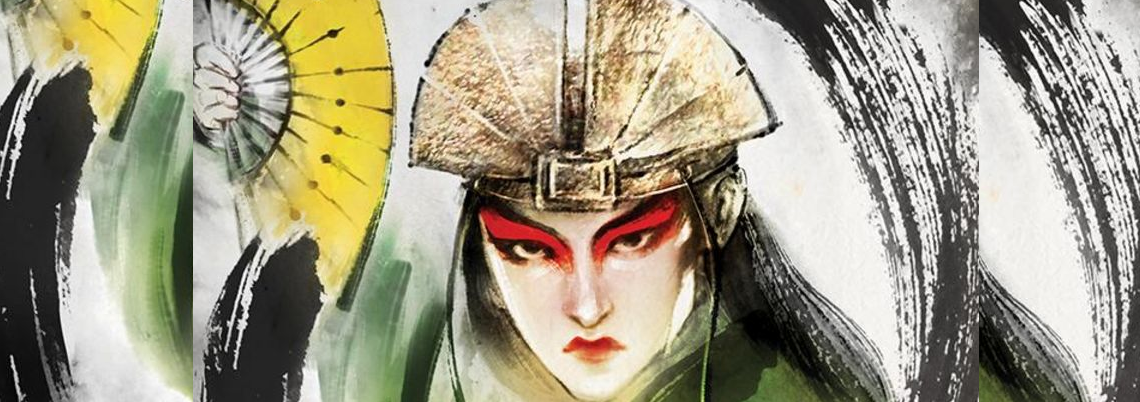
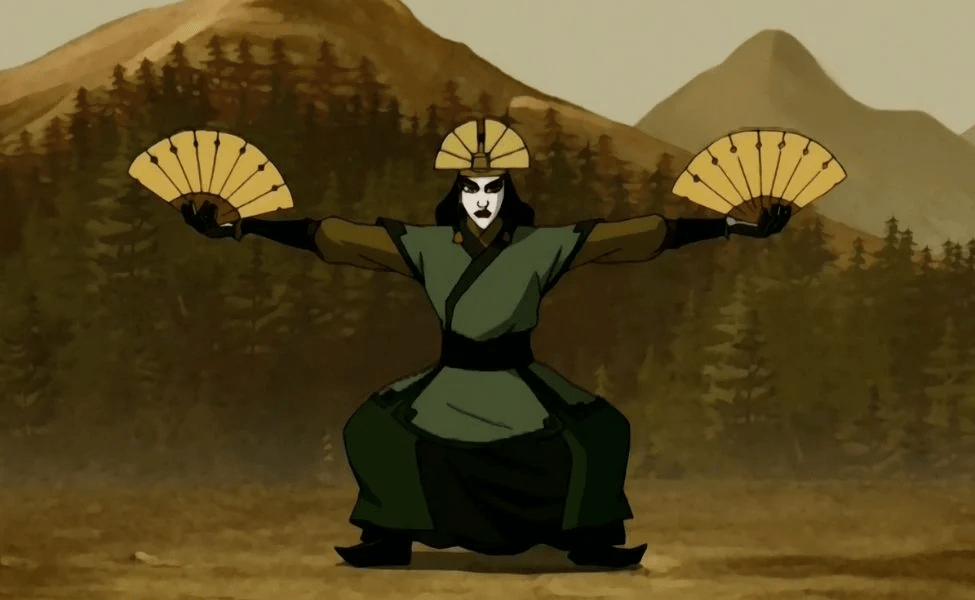
Our main character is Kyoshi, a tall, clumsy and imposing girl whose only loyalties are to her closest friends, in a world where the Avatar has been mysteriously absent.
Audio book, eBook, or Hardback?
I’m a sucker for hardbacks, but my partner recently received The Dawn of Yangchen, another book in the same world as Kyoshi and it is truly a piece of art. This tome comes with not one, but two dustcovers, and the back itself is adoringly decorated with metallic gold text.
I have heard pages from the audio book and I did not resonate with the American English performance in the slightest. Rather than telling the story, the delivery came across as an attempt to make the story even more exciting, but really only succeeded in overemphasising certain words and lines in a rather distracting manner.

I personally read the eBook for Kyoshi, as I read this book over multiple train, plane, and car journeys on my phone.
Talk About the Book – MAJOR SPOILERS AHEAD
Here’s a little bit of write in to prevent speed readers from accidentally reading ahead. OK, now that’s done, one of my favourite things about Kyoshi is how she’s such a dirty Avatar. Avatar Aang is a spiritual character who strives to do good, and Korra was trained with a strong sense of justice. Kyoshi, however, is beautifully raw in her needs, and the unlimited power she gains as part of her Avatarhood has terrifying potential.
She’s the perfect Avatar for an older audience. The story is darker, but it’s far from being edgy. It has too many positive, detailed relationships in it to be ‘edgy’. Truly, the depth of the relationships between characters is what makes this book breath fire.
I’ll be honest. I don’t read much lesbian/bisexual fiction. Far too often, it feels written for the male gaze more than being a genuine romance. Kyoshi made me think that perhaps I’ve just been reading the wrong lesbian fiction. After some time away from the text, I do think that Kyoshi has something special. The girls’ relationship is written with great empathy. They smoulder together. It’s beautiful.
Empathy is one of the author’s talents. Yee has an ability to get into a character’s head and present them in varied and interesting ways. Jianzhu’s POV chapters show this fantastically, as what begins as a lost, grieving soul morphs into one of the most terrifying Avatar villains in the franchise.
There was one major plot point that ended up a little marred by the aesthetics of the book. I’m talking about Yun’s death being a little less than believable due to his awesome ink hand. It feels like a clear marker for very important character status, and that’s later shown to be true. Because of it, I didn’t trust that he was truly dead, even though that belief is what propels most of Kyoshi’s journey.
That said, I don’t hate it too much. It does paint a pretty vivid image, after all.

On the topic of character deaths, we all miss Kelsang. He represented a loss of innocence that Kyoshi had struggled to achieve in the first place, and I miss his place in the story. I could have done with a bit more of his input on Kyoshi’s life and how he challenged her to think more kindly. That said, at least the memory of him is strong throughout, nipping at Kyoshi’s heels whenever she starts to feel a little guilty.
To Conclude
I rated Kyoshi a 5/5 on Goodreads! I’m really looking forward to reading the sequel, though I don’t know when that will be yet.
You can read my review of the sequel here: The Shadow of Kyoshi – Book Review.


 Beyond The Spine Reviews
1 Comment