
Average length blog with some clearly marked spoilers later on.
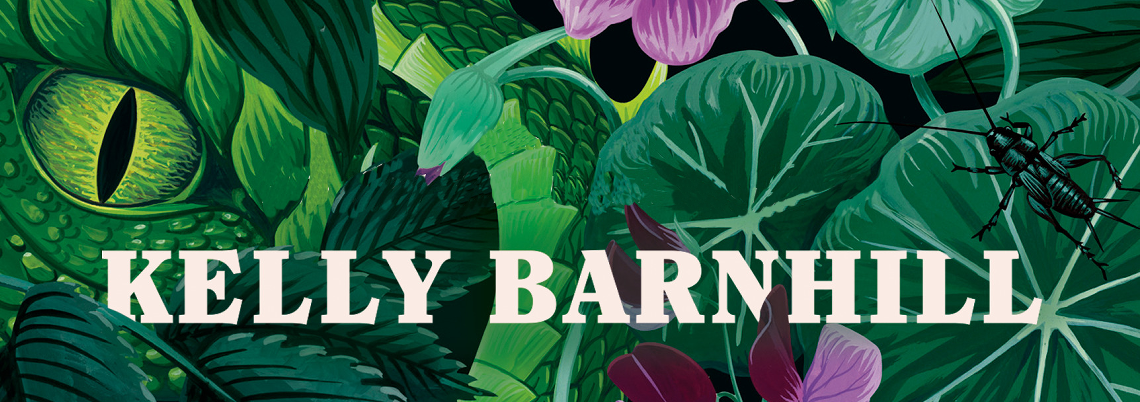
This recent publication written by Kelly Barnhill has a very beautiful cover. I own it in hardback (which isn’t unusual for me) and I read half of it on a plane and the other half on holiday.
I cried a few times near the first third of the book, but admittedly, that was during my plane journey and it’s a well-known fact that being sky-high can make you more emotional! As such, I’m not sure whether those tears would have appeared had I been reading on my usual sofa, at home.

The Descriptions
Now, I mean this is the nicest possible way, but this book had the feel of a literature course to it. It’s a book that wants you to pour over its sentences and descriptions, which are easily flowery enough to allow one to wrestle together some sub-text theories.
In my experience with this book, however, those descriptions often felt a forced. They were inorganic and distracted me from appreciating the narrative.
Now, any writer worth their salt is going to have scoffed at my use of ‘inorganic’ to describe the art of writing. Good writing is, of course, heavily inorganic, with plenty of edits and frustrations and fixes. However, I think the aim is rarely to create a product that feels quite so laboured over. In When Women Were Dragons, the prose didn’t ‘flow’ so much as read ‘overwritten’.
My other criticism of Barnhill’s descriptive style is its repetition. I am unsure whether this was done on behalf of the reader with a short memory, or whether it was a stylistic choice that arose from the POV character’s, Alex’s, obsession over certain moments. Perhaps the intended effect was that the reader, along with Alex, would be subjected to the weight of these Sisyphean memories—and in that case it certainly succeeded—but (re)reading these passages did not feel like I was making progress with the book itself.
Perhaps if the description had varied more with each recollection, I would have better appreciated Alex’s fascination with her memories. Unfortunately, while the descriptions were always initially brilliant, they remained repetitive.

The Dragons
I can’t talk about this book without talking about the dragons! The dragons are certainly interesting, and I’m not entirely sure what to make of them, even now.
They’re large, but not impossibly so. Just big enough to make your average home, office, or school an unsuitable place for them. The dragons are supposed to represent a sort of power, and Barnhill repeatedly reminds the reader that they are ‘too big for their old human lives’ (paraphrased from memory), however, this isn’t what the dragon’s difficulties in squeezing through doorways reminded me of.
The dragons’ inability to use typical human infrastructures simply mimics my own struggles as a short girl. Wherever I go, the properties my husband and I rent are not made with my height in mind. We have a peep hole in my flat that I need a step to see through. My husband can use it fine, but I imagine a dragon would have to stoop too low, or the hole might not be large enough for it to see through.
Irrelevant of their size, these moments failed to convey ‘power’ to me. Instead, they reminded me that irrelevant of our shape, ability, or desires, the only ones who can create an environment that women can really thrive in are women themselves, which we see towards the end of the book.

The Men
I almost can’t believe I’m typing this given the treatment of women in literature for centuries… but nonetheless, the characterisation of men brought the book down for me.
There aren’t many male characters in this book, but largely they all felt like the same man. They were small, ugly, completely lacking in empathy, and usually quite old. From the perspective of Alex, this is fairly believable, however, even more than the dragons, the lacking variation of male characters made many of the situations contained within feel unbelievable. Perhaps, even scripted to paint men as terrible?
Now, I have this same complaint with many books regarding their treatment of female characters, but it isn’t often that I get to flip the coin and see the same done to men. I do wonder if perhaps it’s intentional, but that’s irrelevant since it marred my experience of the text.

How ‘When Women Were Dragons’ Wraps Up
There will be heavy spoilers in this section.
Well, I really didn’t like the ending. I can only describe it as a deus ex machina that all this money appears out of nowhere to solve their problems. It’s unsatisfying when Alex has so much else that’s troubling her. All I could think of was that part in Harry Potter where Harry learns he’s absolutely loaded and he’s just so happy that he won’t have to go to school as a poor person.
Obviously, in Harry Potter, the financial worry was just one small part of the first book, but here, the seizing of a bank account seems to fix everything. It allows Alex to construct a house big enough for her family and the dragons, so it gives her the security she needs, whilst also allowing her the personal space of a private room to work through a lot of her troubles off page. By keeping the smart dragons, Beatrice’s schooling becomes a non-issue, but they only keep the dragons because of the money allowing them to create the house.
After watching Alex struggle to pull things together for so long, and trying so hard, it’s dispiriting to be told that the only way out of her dismal situation is to get lucky and find a secret stash of money. This doesn’t provide much hope for those of us out here in the real world struggling with our own dragons, without the promise or hope of a sudden cash injection.

Summary
There were many stories within this book that I loved. Beatrice, for example, lights this book up as Alex’s dark thoughts threaten to smother everything else. The narrative on the embarrassment of ‘femininity’ was another thought-provoking bonus. In the modern day, dragons are often presented as a masculine, with deep throaty voices, however, when I think back to fairy tales and legend, I think of St. George and the Dragon, and The Laidly Worm, and Morgan le Fay, and Sleeping Beauty, and wonder if perhaps there is a deeper truth to the dragon as a symbol of womanhood.
I don’t think I’ll be rereading this book, unfortunately, which is a shame because I do like a good reread. I don’t think it’s got anything left for me to pluck from its pages, however.
Final score – 6/10

For a more nuanced take on the battle of the sexes, I heartily recommend you read Michelle Paver’s Wakenhyrst instead!

 Beyond The Spine Reviews
2 Comments