
Major spoiler sections clearly marked under subtitles.
Stephanie Garber is something of a booktok sensation with the Caraval series followed by her popular trilogy, (OUaBH) Once Upon a Broken Heart—also the title of the first novel in this series.
The OUaBH series is magical, sweet, romantic, and often a little steamy (but never crosses the line into erotica), and is something of a popcorn trilogy. It’s very easy to read and not incredibly important, however, it excels at entertaining, and for this reason alone I would recommend it to fellow readers. It’s the perfect thing if you need a break.
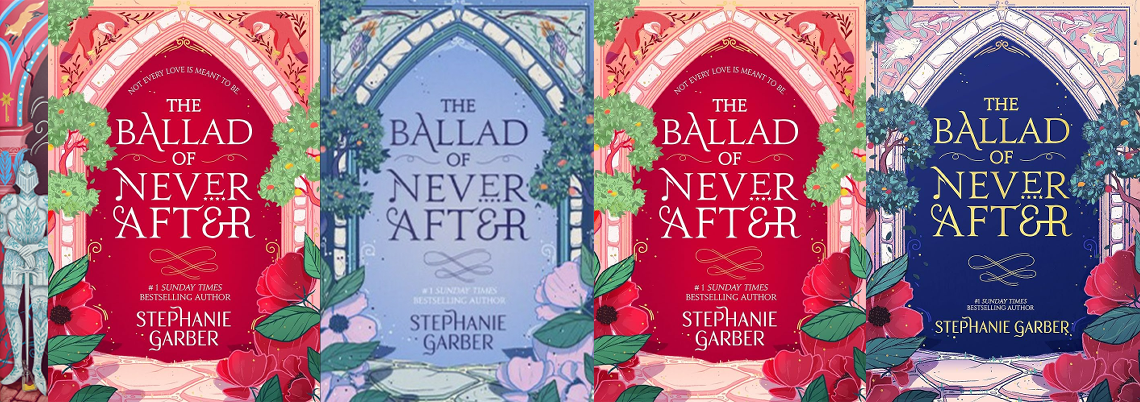
The Ballad of Never After is the second book in the trilogy. You can also read my Once Upon a Broken Heart review!

The Best Moments of The Ballad of Never After
Minor spoilers indicating the level of success of the main point
As before, there is much needed return of tea, cakes, and brilliant dresses. This wouldn’t be Evangeline Fox if she failed to surround herself with the best benefits of high society. As an avid lover of all three of these things, these descriptions are one of the biggest reasons for my eagerness to sit down and read these books—and book two did not disappoint.
On that point, the writing in general was very good and enjoyable. The descriptions are magical and the romance scenes are exciting. Everything pulls together to create immaculate vibes.
In terms of plotting, there were some really fun ideas. Evangeline’s search for the stones was well crafted—I particularly enjoyed Garber’s ability to write a different route to the finding of each stone. No journey was the same, and that must have taken some thought.
I also enjoyed the different powers of each stone, and how different individuals found certain powers more irresistible than others. In this way, these interesting plot devices also became vessels to tell us a little more about the characters who desired them.

My Criticisms of The Ballad of Never After
Major spoilers.
I’m going to start with the big one—this isn’t a girls’ girl book. Specifically, what I’m trying to say, is that if book one had traces of prominent female relationships, The Ballad of Never After evicts them.
Marisol appears briefly, only to be forgotten about, which isn’t so bad given the state of her relationship with Evangeline at the end of book one.
What’s worse is the depiction of LaLa and Petra, the other two prominent females in this book—and they’re really not that prominent. LaLa is sadly relocated from her cozy friendship with Evangeline to ‘backstabber’, which Evangeline bizarrely forgives, despite that LaLa’s actions nearly cost Evangeline her life. This was the one positive female companion in this series, and I was sad to see it broken apart in this book. The only consolation is that across the trilogy, there isn’t a single character who doesn’t betray or backstab their comrades—so in some way it’s only right that LaLa shrugs off any virtuous inclinations in this book. That said, it still felt heartless, and I haven’t yet forgiven that twist.

Then there’s poor, pitiless Petra. She’s there and then she isn’t.
Even though things ended poorly with Marisol in book one, I missed her presence in book two. LaLa and Petra are hardly there, which makes this novel feel more like a harem anime than its predecessor did. Evangeline’s interactions are almost solely with hot male interests—which is OK for a popcorn book, but compared to book one it really did feel lacking in the female friends department.
My next critic is of the writing—sometimes it feels like Evangeline just ends up at places without much agency. It feels like the plot throws her around rather than she decides where to go, but despite this, she still felt more active than she did in the latter half of book one.
Next up on the crit list is a harsh one because I can’t even give it a proper chance without reading book three, but ending the book on Evangeline’s amnesia fills me with dread. I’m not a fan of amnesia storylines, but maybe it will surprise me.

Conclusion
It’s definitely not ‘literature’ in the snobbish sense, one can’t think too hard about it, but you should read it anyway. That’s the mentality with which I’ll be approaching book three, A Curse for True Love!


 Beyond The Spine Reviews
1 Comment