
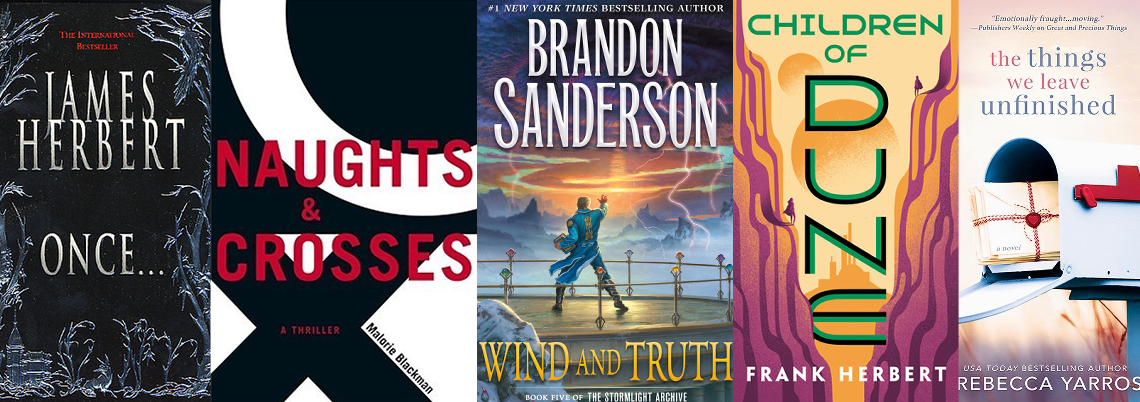
Brandon Sanderson was the first established author I saw to state that they will only rate or review books that they would really recommend [0], but what caused me to write this post was Robin Hobb’s recent thoughts on Goodreads, where she asks whether sharing opinions on why certain books don’t work is truly useful to anyone.
“If I did a lesser [rating] number, I might start saying why that book didn’t work for me; is that truly useful to anyone? So I will continue to only review the ones I really enjoyed.”
Robin Hobb, Nov 24, 2025 [1].
On one hand, I agree. There’s a nicety to only sharing thoughts on the things that one loves. By putting more effort into reviews that will spread positivity, we assign a higher value to love and happiness, and it’s hard to argue against that (but I will).
On the other hand, I am certain that sharing critiques has value for aspiring writers and readers. Sometimes, I struggle to explain precisely why I didn’t vibe with a particular book, but another reviewer has already explained it perfectly. It’s a brilliant ‘ahah!’ moment.
“As I’m only posting on [Goodreads] books that I liked, I will rate everything at an even five-star level. […] The last thing that authors need is to feel that someone prominent in the field is gunning for them.”
Brandon Sanderson, [0]
Because I’m not (yet) a prominent author, my reviews certainly have less impact on other writers. Currently, I’m an internet nobody with big opinions, but one day that might change and I will have to rethink my stance on negative reviews.
For the moment, however, I will continue to review every book I read with some degree of honesty. If I didn’t enjoy it, I won’t hide that, but I will try to avoid being unreasonable, unempathetic, or vague.
For me, blogging is a way to sort my thoughts out. If I’m not prepared to post it online, then I’m not prepared to put the same amount of effort into my criticism, and if I don’t post it then I’m never going to return to those thoughts.
Because the blog is online, I am regularly revisiting my thoughts as I edit pages closer to perfection. I never go through my desktop’s folder of unpublished drafts, for comparison.
One could argue that if I only focused on books I enjoyed and how well they write, then I could instead focus on those lessons, but I don’t think that’s entirely useful for an aspiring writer—we need to think about the common pitfalls just as much as we need to learn how to write with magnificence.
Cancel Culture
I’m of the opinion that cancel culture has gone too far. It’s cool that the masses have learnt to exert their influence on key figures, but the stranglehold it puts on free speech and art is devastating.
To speak their minds, public figures now have to weigh the risks of losing their entire careers over being human. Don’t get me wrong, some might deserve this, but it makes everyone hesitate to say what’s important, and that can be deadly for art.
For writing giants, perhaps there’s an element of cancel culture fear when it comes to negative reviews, and I mean that in both ways. A bad review from an icon could feel like the end of a smaller writer’s career, which is a heavy emotional burden for the giant to bear. Meanwhile, a bad review could also backfire on the giant if the masses disagree, leading to the giant suffering a popularity dip for sharing their truths.
On both counts, it’s easier to just stay positive. There’s less to be lost.
Why I Look for Negative Reviews
“I might start saying why that book didn’t work for me; is that truly useful to anyone?”
This questioning from Robin Hobb is the whole reason this post exists.
As a reader and writer, I use negative reviews to help validate why I didn’t like book, but also to temper my desire to claim that certain books are perfect. Without negative reviews, I would not have realised that the first Mistborn trilogy, a series that I hold close to my heart, has shockingly few female-only interactions. Negative reviews pointed this out to me and encouraged me to think about the kind of fiction I want to write, as well as my ability to stay critical when presented with certain story lines.
At other times, I just struggle to explain why a book wasn’t working for me. Other people’s negative reviews help me to better understand my own misgivings.
How to Write a Meaningful Negative Review
This includes tips on what one should look for when searching for critical reviews. There are some reviewers I’ve stumbled across that try to make a career out of hatred, and that’s not OK. I’m not looking to read or write rage bait, I’m aiming for something that’s almost educational.
It’s also important to remember that there is a creator—a real human—behind the art that is being reviewed. Criticism doesn’t need to be apologetic, but one should never forget empathy.
A good negative review should consider the good as well as the bad. It should be more than an effort to slate the art piece, it should be thoughtful and precise, and understanding that one individual’s frustrations with a book might be exactly what someone else is looking for.
This is the reason that I don’t rate or review art from a purely technical stand point. I will rate a flawed book or film five stars because I enjoyed it, not simply because of technical perfection. My reviews should paint a picture for readers who read similarly to me, not a general audience.
Negative Reviews on Beyond the Spine
I’ve written a few critical reviews for this platform, some more emotive where others are more logical, and some for authors that I have enjoyed in other books or series!
- Once, by James Herbert
- Children of Dune, by Frank Herbert
- The Things We Leave Unfinished, by Rebecca Yarros
- Stormlight Book 5 Day 5, by Brandon Sanderson
- Noughts and Crosses, by Malorie Blackman
Subscribe to the blog for email updates on book reviews that could be positive, negative, or somewhere in-between.

 Beyond The Spine Reviews